I Am Grayson Murray

Before I start on why I picked the title “I Am Grayson Murray” for my first blog, I need to share a few things. First, I have never been a “blogger.” I have never written or commented on a blog. I think I have read a few, but I can assure you I am very apprehensive about putting this out into whatever we call this now…..Cyberspace? So please be kind as you judge my first attempt at this endeavor.

Second, I take a “Ready, Fire, Aim” approach to stuff like this. By that I mean that I just jump in an do it first and then learn as I go. This tends to drive people who are concerned about details CRAZY!!!!  Hopefully, you and others like you will help me get better at this.

Finally, I am starting the “Just Live” blog to both help people and help myself. I hope that this will be a place where people like you can come to learn, ask questions, vent, and feel like it is a safe place to talk about whatever struggles you or someone you love is going through. It is also therapeutic for me to talk about this stuff and what I go through as someone who has dealt with mental illness (I was diagnosed as bipolar 2 in 2000) for over forty years. 

So, why did I pick this title? You may not have had any idea who Grayson Murray was until recently. I did not know who he was until a few days ago. On May 25, 2024, it was announced that Grayson Murray had died suddenly. He was playing in the PGA Charles Schwab Challenge and had withdrawn the day before because of an “illness.” I really did not think much about his death other than he was really young (he was 30 years old). 

I saw a story on the ESPN website and read a bit about what his family said about his death the day it was announced. Although they did not mention a cause of death, I told my girlfriend that I was about 99% sure that Grayson had died by suicide. Tere asked me why I thought that and I said that I could just tell by what his family said about his life leading up to his death. 

I don’t recall exactly what his parents said about his life, but it was similar to things I have heard about others who have died from suicide. Things like:

  • He had struggled with his drinking when he was a younger player on the golf tour.
  • He had been very open about his battles with anxiety and depression.
  • He had struggled with his profession (playing golf) both physically and mentally.

There are two reasons why I think that I knew that Grayson’s death was a suicide a day before it was confirmed by his parents. The first reason is that I have done lots of research on suicide and suicide prevention over the last decade or so. My dissertation (which I hope to finally finish this summer) is about preventing suicide among young African-Americans. I have also been a certified suicide prevention trainer since 2010. 

The second and main reason that I knew that Grayson died by suicide is that I feel like I am very much like Grayson. By that, I mean that I could have easily died by suicide when I was thirty years old. 

I think I can relate a bit to Grayson and his struggles. On the outside, it sounds like he had everything. Obviously, he was a terrific golfer. He was playing on the PGA tour. He had just gotten engaged and had turned his life around by rediscovering his faith in God. Even with so much going for him and things in his life taking a turn for the best, he was apparently still battling with mental illness. 

I feel like I can relate to the pain that he had to be dealing with at the time leading up to his death. Feeling suicidal is hard to explain. It is unlike any illness I have ever experienced. There is no test you can run or x-ray to get to the root of the problem. The anxiety, despair, and hopelessness that I have felt when I have been suicidal is excruciating. It can be hard to express to someone just how bad you feel, but I think I have experienced what Grayson went through in his battle with mental illness.

Some may wonder how someone who is so young and talented could feel so bad they want to die? Mental illness is not selective. It does not happen just to poor people or unsuccessful people or people who have hit a rough patch in life. In fact, it is very possible that Grayson’s success as a golfer and other positive things that had happened to him recently actually made him feel worse. He might have wondered how someone with all his success, a new fiancé, and sobriety could still be depressed. That is like asking why someone with all those things happening could get pancreatic cancer. It can happen to anyone.

I was thirty years old the first time I attempted suicide. I can’t say that I had the same struggles that Mr. Murray had with addiction, but I think I have a good idea of the pain he was suffering with when it came to his mental illness. I was also fairly successful when I was thirty. I was in my third year as a school administrator and on my way to what looked to be a very successful career in education. I was married to a great woman, had a beautiful six-month old daughter, and lived in a big house on a golf course. Even with all of that going for me, I wanted to die. I thought about killing myself almost daily. Finally, on October 19, 1997, I attempted suicide for the first time. 

Luckily, I survived that attempt along with five others between 2002 and 2010. The main reason I am alive is that I am terrified of guns. If I owned a gun or had access to one, I am certain I would be dead. 

In the end, it really comes down to this. I was just lucky. I was lucky to survive trying to kill myself through carbon monoxide poisoning and drug overdoses. 

Over the last fifteen years or so, I have still struggled with depression. Being bipolar 2 means I don’t get the crazy, manic episodes that someone who is bipolar deals with. My manic episodes are much more subtle……which I am thankful for. My demons still come around here and again, but not nearly as often.

I have not attempted suicide in almost fifteen years. I have thought about it a few times, but not very often. I can probably count on one hand the times it has crossed my mind or I have thought about a plan since 2010. 

The key for me has been accepting mental illness as part of who I am. Kind of like someone with diabetes becoming good and dealing with their illness by taking their insulin and changing their diet, I have done something similar with depression.

I have a great support system with my girlfriend, parents, my children, my brothers, Matt and Jerrod, and many great friends. I am pretty open about my struggles and when I am feeling down. I encourage people close to me that it is ok to check on me and ask how I am feeling. 

My hope is that this blog will be a place that all of us can use to help prevent other like Grayson Murray losing such a difficult battle. My hope for Grayson and his family is that they at least can take solace in knowing that he is no longer in pain anymore. 

Peace…..Jeff 
Things People Get Wrong about the NBA

Things People Get Wrong about the NBA

For the fifty years or so that I have been watching NBA basketball, there has been one constant…..basketball fans talking about everything that is wrong with the NBA. Players are too selfish, they don’t play hard, they travel all the time, they don’t play any defense, and on and on and on.

I will admit that there are some things I would change about the NBA (move the 3pt line back about two feet, punish teams for tanking, and stop with this load management crap), but believe most of the stuff that people complain about year after is simply wrong.

So, here goes my defense of some of the easy target for the NBA…..

The NBA is not as Popular as Other Sports

Some will say that people don’t watch NBA games on TV. Well, all I know is that there are NBA games on TNT, ESPN, and ABC throughout the season and ratings have remained fairly steady in the 2000s with somewhere around 1.3M to 1.7M viewers estimated for regular season games.

To me, the most important measure of a league is how much the teams are worth. According to a 2022 article by Forbes in 2022, the NFL had the highest number of teams valued in the Top 50 in the world. My beloved (and very, very frustrating Dallas Cowboys were #1 at an estimated value of $6.4B). The NFL is king in the US with half of the top 50 most valuable franchises in that league. But the NBA is second based on the number of teams in the Forbes’ Top 50 with seven teams:

  • NY Knicks $5.8B
  • Golden St.Warriors $5.6B
  • LA Lakers $5B
  • Chicago Bulls $3.65B
  • Boston Celtics $3.55B
  • LA Clippers $3.3B
  • Brooklyn Nets $3.2

Major League Baseball has five teams in the top 50 and the other thirteen teams are made up of teams from European Soccer leagues. There were no teams from the NHL or Major League Soccer on the list. Forbes also estimated that the average NBA teams is worth about $2.8B. I think it is safe to say the NBA is stable when it comes to the value of its teams and that is a sign of the league’s popularity.

Players Get Away with Traveling on Every Possession

This is one of a couple of complaints about the NBA that fans and critiques have repeated for years. Now, I will admit that there is some traveling in the NBA that officials either miss or let players get away with. The reason people get this wrong is that they don’t understand the rules for traveling in the NBA.

The official for how many steps a player can take before being called for traveling are as follows

Definition of the Gather

The following definition of the gather will be added to the definitions section of the playing rules:

  1. For a player who receives a pass or gains possession of a loose ball, the gather is defined as the point where the player gains enough control of the ball to hold it, change hands, pass, shoot, or cradle it against his body.
  2. For a player who is in control of the ball while dribbling, the gather is defined as the point where a player does any one of the following:

    1. Puts two hands on the ball, or otherwise permits the ball to come to rest, while he is in control of it;
    2. Puts a hand under the ball and brings it to a pause; or
    3. Otherwise gains enough control of the ball to hold it, change hands, pass, shoot, or cradle it against his body.

Incorporating the Gather into the Traveling Rule

The gather will be expressly incorporated into the traveling rule to clarify how many steps a player may take after he receives the ball while progressing or completes his dribble:

  • A player who gathers the ball while progressing may (a) take two steps in coming to a stop, passing or shooting the ball or (b) if he has not yet dribbled, one step prior to releasing the ball to start his dribble.
  • A player who gathers the ball while dribbling may take two steps in coming to a stop, passing or shooting the ball.
  • The first step occurs when a foot, or both feet, touch the floor after the player gathers the ball.

Very simply, players can take two steps after they gather the basketball (typically with two hands) and one they gather the ball, the first step is when their foot hits the floor after the gather. For a visual explanation, watch this video:

https://www.youtube.com/watch?v=J5xGKioMsIo

I believe the NBA allows players to stretch the traveling rule to its fullest to allow for more creativity and great plays on offense. Isn’t that really what we want to see?

There is No “D” Played in the NBA/Scoring Has Never Been Higher

I combined these two together because they are really related and they are both wrong (or, at least kind of). First, let’s talk about the idea that players don’t play defense in the NBA. That is patently false. If you watch the really great players like KD, Steph, Bron, Kawhii, etc. teams guard them hard for the entire time they are on the floor. There are two problems with trying to guard elite scorers:

    1. Good offense will generally beat good defense in basketball.
    2. The rules in the NBA are set up to make it harder to play “team defense.”

If you are a true NBA fan and old enough to remember the game in the 90s, it was awful. It was common for games to be played in the 80s. Isolation basketball, clutching and grabbing. Hell, the Utah Jazz scored something like 56 points in a game in the 1997 NBA Finals. 56 POINTS!!!! There have been teams score over fifty points in a quarter this season. The NBA made some rule changes to open up the game in 2001 and one of those was to change the rules for illegal defense. Also, watch Steph Curry during a possession and how much he moves. Guarding him is almost impossible and there are lots of guys like him. I believe it was a great change for the game and made the flow of the game much better for everyone.

The second complaint about scoring being at an all-time high is partially true. Overall, the teams in the NBA are scoring more points than ever. Every team averaged at least 109ppg in 2023 with the Sacramento Kings leading at just under 121ppg. However, if you look at the twenty-five highest team scoring averages over a season, only two teams after 1995 are on the list. The 2022-23 Kings rank #20 and the 2020-21 Bucks are #24. Most of the teams in the top 25 are from the early 1960s and the 1980s.

The misleading part is that even though teams now are scoring move overall, a big part of that is the three-point shot. The all-time leaders for points in a season are the 1981-82 Denver Nuggets at 126.5ppg. However, that Nuggets team only made 40-149 three-point shots attempted during the entire 82 game season. Compare that to the 2022-23 Kings who made 1128-3060 triples during the season. That is 13.6/36.9 three-point attempts each game. In fact, the Chicago Bulls made the fewest threes in 2022-23, 854, and that is still over ten made threes/game.

Players Are Not as Good as They Used to Be Back in the Day

This is completely subjective, but the NBA has never had more talent. Almost every team has at least one great player and the good teams have two or three. The playoffs are a struggle starting in round one. Just this year the #8 Miami Heat upset #1 Milwaukee four games to one. You can find players from any era who could play today and still be good. Bill Russell, Wilt, Hondo, Oscar, Rick Barry, Bird, Magic, Kareem, MJ, Kobe, Tim Duncan and on and on would all be solid to great players today. But, don’t act like the game has gotten worse. Or that the players have gotten worse.

The talent pool is larger now because of the influx of foreign players into the league starting in the early 90s. There were almost no foreign players in the league prior to 1990. Now, every team has foreign players on their team and that just means the talent pool for the league is worldwide and not just from the US.

Stop Blaming One Play for a Loss

Stop Blaming One Bad Call (or Play) for a Loss

We have all been there. End of a big game. Your team is in a tight battle with their opponent to win a game or even a championship. The excitement builds and you are on the edge of your seat. And then it happens ….. an absolutely horrible call goes against or one of the players on your team makes a bonehead play and it seemingly costs your team the game.

Now, I am not talking about games that may have been fixed. I don’t believe that any professional or college league is fixed, as some conspiracy theorists do. I will admit that there have been games fixes at bother the college and professional level. Look up Tim Donaghy or the Boston College basketball team that fixed games in the late 70s. Those games are not included in this discussion.

The list of games that people blame on one play or call is endless, but a few that come to mind are:

  • Chris Webber’s timeout against North Carolina in 1993.
  • No interference call against the Rams late in the 2018 NFC Championship against the Saints.
  • The University of Colorado’s “fifth down” on the game winning drive against Missouri in 1990.
  • Derek Jeter’s homerun against the Orioles in the 1996 ALCS.
  • MJ’s “push off” of the Jazz’s Bryon Russell in game six of the 1998 NBA Finals.
  • Brett Hull’s goal in the 3rd overtime of game 6 of the 1999 Stanley Cup Finals between Dallas and Buffalo.
  • The “Tuck Rule” game between the Patriots and Raiders in 2001 AFC playoffs.
  • Bill Buckner’s error in Game 6 of the 1986 World Series between Boston and the New York Mets (a play that Buckner, who could barely walk, should not have been in the field for at that point in the game).

All of the games were tough losses for the fans of the losing teams. But, once the games are over, anyone can look back at other plays in the game that they could have executed better or that went against the winning team. Officials are going to miss calls. Players are going to make mistakes. Even professionals are going to make bonehead plays sometimes. Hell, Magic Johnson let the clock run out in Game 4 of the 1984 NBA Finals at Boston with the Lakers up 1-0 in the series. The game was tied 113-113 with under ten seconds and the Lakers did not get up a shot because of Magic (some called him “Tragic” Johnson for a bit after that game).

My point is that coaches, players and fans can look back at any game or series and point to numerous plays that would have allowed their team to overcome a bad call or play. I am going to analyze one famous blown call to show why you can’t blame a loss on one play.

Since I live in St. Louis and have been a Cards’ fan since “Whiteyball” became a thing in the early 80s, the play I will consider is the blown call by Don Denkinger at the end of Game 6 in the 1985 World Series between the Cardinals and Kansas City Royals.

Let’s go back to October 26, 1985. I can still remember where I was that Saturday night. I was a freshman at Rend Lake College and was on the basketball team. We were hosting a jamboree of junior high basketball games that day, so I was not able to watch the game. But, one of our managers had a radio near the score bench and we were listening to the game.

The Cards led the series 3-2 heading into game 6. We listened to the game as the Cards held a slim 1-0 lead going into the bottom of the 9th inning. Todd Worrell was the Cards’ young, flamethrowing reliever and they were almost unbeatable with a lead in the late innings. Needless to say, we felt good about our chances for the Cards to win the game.

Jorge Orta pinch hit for Darryl Motley to lead off the 9th inning. Orta hit a dribbler down the first base line and Jack Clark tossed the ball to Worrell as Orta charged down the line to the first base bag. It was a close play. In fact, the first time I saw the play later that night, I was not sure if he had blown the call. After watching the replay, it was clear that Orta was out. Watch for yourself below.

https://www.youtube.com/watch?v=vyt1xEvqqow

I am not sure the call is as bad as many make it out to be. It was an odd play all the way around. Worrell kind of turns his foot on the bag and just twists in a weird way once he catches the ball. I also think Denkinger might have thought Worrell was off the bag. After that call, the rest of the inning went like this:

  • Steve Balboni singled.
  • After a force out at the 3rd, a passed ball by Darrel Porter gave the Royals runners at 2nd and 3rd with one out.
  • Hal McRae was intentionally walked to load the bases.
  • Former Cardinal, Dane Iorg, got the game winning single and the Royals won 2-1.

The Royals would go on to win game seven and the 1985 World Series the following night. Cards’ fans still blame Denkinger for that Series loss. Even up to his to his death on May 12, 2023. I have read that he and Whitey Herzog became great friends and that Whitey has said that he should not have been vilified the way he was.

After almost forty years, it is time to look at that game and that series to show why that one call did not beat the St. Louis Cardinals in 1985. First, let’s look at how the series played out by game. The scores for each of the seven games were:

Game 1 StL 3 KC 1

Game 2 StL 4 KC 2

Game 3 KC 6 StL 1

Game 4 StL 3 KC 0

Game 5 KC 6 StL 1

Game 6 KC 2 StL 1

Game 7 KC 11 StL 0

Things to note about the series:

  • The Cardinals are the only team in MLB history to win the first two games on the road and lose the series. Just win two of three at Busch and the series is over.
  • The Cards had a 3-1 series lead and only needed to win one of the last three games to win the series.
  • The play that likely did cost the Cardinals the series did not even happen in a game or even that series. Vince Coleman was injured when he got run over by a speeding tarp before game four of the 1985 NLCS against the Dodgers. Not having their leading base stealer and leadoff man was a killer. But, even without Coleman the Cards were in the driver’s seat for most of the series.
  • The Cardinal’s offense was ATROCIOUS!!!!
  • They scored a total of thirteen runs in seven games. THIRTEEN!!!! The Cards led the NL in runs scored with 4.6 runs/game.
  • They hit .185 (40/216) for the series. They led the NL in hitting in 1985 with a team batting average of .264.
  • They had a total of ten doubles and one triple for the series. The fact that the Cards only hit two homeruns was not a huge factor because they played small ball. They only hit 87 homeruns during the 1985 regular season. But they led the NL in triples and were fourth in doubles. They absolutely blew teams away with their speed on that turf at Busch. Plus, Kansas City also played on a turf field and that should have been plus for the Cards.
  • They stole two bases in the series. This was a killer for them. Vince Coleman stole 110 bases and the team stole 314 during the 1985 regular season. That is almost two steals a game during the regular season. (How did the Cardinals even win a game in this series?)
  • Andy Van Slyke, Ozzie Smith, Darrel Porter, Tom Herr, and Cesar Cedeno all appeared in at least five games in the series. They combined to hit 11-90 (.122) with two doubles and one RBI. Tom Herr led the team with 110 RBI and Jack Clark was second with 87. Those two, batting 3rd and 4th, did not have an RBI in the series.
  • Not having Vince Coleman is what beat the Cardinals!!!!

As bad as the Cardinals were on offense, they still had a 1-0 lead heading into the bottom of the ninth inning with their talented young closer, Todd Worrell, on the mound. Worrell had made his debut for the Cards late in the season and would win NL Rookie of the Year in 1986.

Now, let’s take a closer look at the 9th inning of game 6. If you watch the entire inning, the Cards still had a chance to close out the series even with Denkinger’s missed call, but two crucial mistakes (besides the missed call by Denkinger) cost them dearly. You can watch the entire inning, as painful as it may be for any Card’s fans, on the link below:

https://www.youtube.com/watch?v=FUAH1xg2ruE

The Bottom of the 9th Inning!!!

After Denkinger’s missed call, Orta is on first base with nobody out. Here is how the rest of the inning played out:

  • Steve Balboni is the next batter. He hits a pop up down the first baseline that Jack Clark absolutely butchered. It was not an easy play, but Clark should have caught that ball. I think Jack Clark would admit that. If Clark makes that play, the Cards would have a runner on first with one out if that play is made. Instead, Balboni singles and now there are runners on first and second with nobody out. This was the first play that killed the Cards’ chances.
  • The Royals put in a pinch runner for Balboni.
  • Jim Sundberg attempts to sacrifice, but Worrell makes a huge play and gets Orta at third for the first out.
  • Hal McRae comes to the plate with one out and runners on first and second. McRae was a solid hitter during his career, but he was hitless in the series.
  • On the second pitch to McRae, Porter allows a passed ball and now there are runners on second and third with one out. It appeared that Worrell threw a curve or slider when Porter was expecting a fastball. Regardless, that cannot happen in a game of this magnitude.
  • McRae is intentionally walked to load the bases with one out.
  • Former Cardinal, Dane Iorg, drives in the tying and game winning runs with a single.

The series was still not over. The Cards had a chance to win game seven. Their ace, John Tudor, was set to start the final game for them on Sunday night. Tudor had a rough start to the season (1-7 with a 3.74 ERA), but he finished 20-1 with a 1.37 ERA. His final record of 21-8 and 1.93 ERA led to him finishing second in the Cy Young voting to a young Dwight Gooden (24-4 and 1.53 ERA).

Game seven was a disaster from the start. It was obvious that the Cards were shaken from the loss the night before and Tudor was not right. Daryl Motley crushed a Tudor pitch that missed being a homerun by a few feet. On the next pitch, Motley crushed another ball and this one was fair. KC was up 2-0 and it just got worse. The final score was 11-0 and KC had their first world title.

The only enjoyable moment for Card’s fans was Whitey Herzog putting Joaquin Andujar in the game to pitch in the fifth inning. Andujar was, as he liked to say, “one tough Dominican” and he let out all of the frustrations with Denkinger’s blown call in Game 6 out after about fifteen pitches. If you want to watch Andujar’s meltdown, go to 1:37:00 on the video below:

https://www.youtube.com/watch?v=QqAPmdnzxdE

I think Whitey had to know that Andujar was going to go off.

As much as I hated the Cards losing in 1985, they had their chances and just came up short. They overcame a lot with the injury to Coleman and still somehow had a chance, but Don Denkinger’s bad call did not beat them. What do you think?

Greatest Final Four Ever Played

The Greatest Final Four Ever

The NCAA tournament is one of the most popular sporting events in the United States. In 1939, eight teams played in the initial tournament with Oregon beating Ohio State for the title. Harold Olsen, the head coach at Ohio St. in 1939, is credited with starting the NCAA tournament.

According to NCAA.com, the tournament expanded to sixteen teams in 1951, thirty-two teams in 1975, forty-eight teams in 1980 and then to sixty-four teams in 1985. The last time the tournament added teams was in 2011 when “play-in games” were added to expand to the current number of sixty-eight teams.

The NCAA tournament has become so popular that men plan their surgeries around the tournament. The Wednesday before the first round starts on Thursday is allegedly the day for the most vasectomies are performed in the U.S. I have done no research to determine if that is true, but I am certain that day is at least in the top five. All I know for sure is the first four days of the tournament are any true basketball fans favorite time of year. Sixteen games on Thursday and Friday and then eight on Saturday and Sunday starting at 11am and ending around midnight. What is not to love?

I remember watching the tournament as a young boy in the mid-70s. I can recall my dad watching Indiana beat Michigan in the 1976 title game and I also watched part of the title game in 1977 when Marquette sent Al McGuire into retirement with a championship.

However, the NCAA tourney did not take off until 1979. That was the year Larry Bird and Indiana State met Magic Johnson and Michigan St. in the final game. To this day, that is still the highest rated NCAA game in history. Over 24 million people were estimated to have watched the Spartans beat the Sycamores that night.

A few years ago, I asked myself “What was the greatest Final Four of all time?” There have been over eighty NCAA tournaments and several have been memorable. Some of the ones that I considered were:

  • The 1966 Final Four with Kentucky, Duke, Utah, and Texas Western (now UTEP). That tourney was the first in which an all-black starting five at Texas Western beat an all-white team from Kentucky to win the title. It changed the landscape of college basketball because schools in the south, like Kentucky, started recruiting black players. There is even a movie about that Texas Western team called “Glory Road” from 2006.
  • 1973 with UCLA, Memphis St., Indiana and Providence. UCLA beat Memphis for the title and finished undefeated for the second straight year. Their winning streak was at 60 games and would grow to 88 before losing to Notre Dame in 1974. The most amazing stat of the final was Bill Walton was 21-22 from the floor and finished with 44 points. Probably still the greatest single game performance in Final Four history and maybe in NCAA history.
  • 1979 with Michigan St, Indiana St, DePaul, and Penn. As I stated earlier, MSU vs ISU is still the highest rated NCAA game in history. Magic vs Bird. Enough said.
  • 1983 with NC State, Houston, Louisville, and Georgia. NC State stunned Houston in the final 54-52 on Lorenzo Charles’ dunk, but the best game of the tourney was likely the semifinal between Phi Slamma Jamma (Houston) and the Doctors of Dunk (Louisville). NC State vs UGA seemed like a jayvee game being played before Houston and Louisville ran up and down the floor and dunked what seemed like thirty times (it was closer to like fifteen) with Houston winning 94-81.
  • 1985 with Villanova, Georgetown, Memphis St. and St. Johns. The first Final Four with three teams from one conference, the Big East. Villanova played over their heads for three weeks and shocked the world by playing an almost perfect game to beat #1 and defending champion, Georgetown, 66-64.

There were other Final Fours I could add like 1990 with UNLV blowing out Duke, 1999 when UConn upset heavily favored Duke, 2008 when Kansas upset Memphis, and 2022 when Duke and UNC finally met and UNC beat Duke in the NCAA tourney in Coach K’s final game (notice a pattern of Duke losing in my favorite Finals Fours?), but I will stop with the ones I mentioned above.

There are four criteria that I used to choose the greatest Final Four of all time. First, the Final Four selected as the greatest had to have something historic or unusual happen. Like the first time the 3pt shot or shot clock was used or the first time an all-black starting five played in a game (see Texas Western above).

Second, great coaches. There has to be at least a couple, if not four, memorable coaches for the teams playing in the final weekend of the season.

Next, an abundance of great players. Guys who were great (or at least really good) in college and a few who went on to stardom in the NBA.

Finally, at least one memorable game. It is hard to have three memorable games at the Final Four, so one is all I require. With all that being said, my choice for the greatest Final Four of all time is…….

1982 Final Four in New Orleans, LA.

This Final Four was historic and not just because we were introduced to a skinny freshman named Mike (now Michael) Jordan. A friend of mine, Ed Belva, attended the games that weekend and bought me a Final Four t-shirt with all four teams, UNC, Georgetown, Louisville and Houston, on the shirt. I wore that shirt until it finally just disintegrated.

What was historic or unusual about this Final Four? It was the first Final Four played in a domed stadium. Over 50,000 people packed the Louisiana Superdome, home of the NFL’s Saints, to watch three games over the course of Saturday and Monday. Only one other memorable game had been played in a dome up to that time and that was the 1968 showdown between UCLA and Houston. Now, every Final Four is played in a dome due to the popularity of the tournament. In fact, I believe that last Final Four played in a basketball arena was 1996 when Kentucky beat Syracuse at the old Meadowlands in New Jersey.

What about the coaches? Well, you had Dean Smith from UNC, John Thompson from Georgetown, Louisville’s Denny Crum, and Guy V. Lewis from Houston (who also coached the Cougars in the game that was played at the Astrodome in 1968). Those four coaches combined to win five national titles, lead their teams to multiple Final Fours, and won over 2700 games in 125 seasons as head coaches. Dean Smith was the winningest coach in NCAA history for a few years and still ranks seventh. All four coaches are in the Naismith Hall of Fame.

How about the players on the four teams? Well, there were nineteen NBA draft picks between the four teams (this is a little misleading because there were seven rounds in the NBA draft in the early 80s and now there are only two, but still, that is a lot of talent). The list of the top players for each of the teams is staggering:

North Carolina

Tar Heels

Georgetown

Hoyas

Louisville

Cardinals

Houston

Cougars

Michael Jordan*

James Worthy*

Sam Perkins*

*NBA Draft Picks

Patrick Ewing*

Eric “Sleepy” Floyd*

Fred Brown

Bill Martin*

Anthony Jones*

Derek Smith*

Jerry Eaves*

Lancaster Gordon*

Rodney McCray*

“Scooter” McCray*

Milt Wagner*

Charles Jones*

Wiley Brown

Clyde Drexler*

Rob Williams*

Larry “Mr. Mean” Micheaux*

Michael Young*

Hakeem Olajuwon*

Benny Anders

Here are just a few of the accomplishments the players in that Final Four achieved during their playing careers in college and the NBA:

  • Worthy, Ewing, and Olajuwon were all three #1 overall picks the year they were drafted (MJ was selected 3rd after Dream and Sam Bowie in 1984….shocking, I know).
  • Worthy, Jordan, and Ewing all won at least one National Player of the Year Award.
  • Players were named 1st, 2nd, or 3rd-team AP All-Americans thirteen times (some were named multiple times) between 1981-85.
  • UNC lost to Indiana in the 1981 national final, Louisville’s players were the bookends to the 1980 and 1986 National Titles they won, Georgetown won the 1984 Title and lost in 1985 to Villanova, and Houston would make the Final Four in 1983 and 1984 and lose in the finals in both. Players on these four teams combined for four National Championships and twelve Final Four appearances from 1980-86.
  • Jordan, Worthy, Ewing, Olajuwon, and Drexler were all inducted into Naismith Basketball Hall of Fame.
  • Too many NBA MVPs, All-Stars, All-NBA teams, and NBA titles to name.
  • And, of course, this was when we first saw MJ’s greatness.

Finally, the national championship game was historic and memorable for two reasons ( one great play and one not-so-great). The semifinal games were fairly pedestrian. UNC beat Houston 68-63 and held the Cougar’s leading scorer, Rob Williams, to zero points. Georgetown slowed the tempo and beat Louisville 50-46 in the second game.

The championship game had huge hype leading up to tipoff. John Thompson had his team stay in Mississippi, some seventy miles away from New Orleans, to shield his team from the media and fans. Dean Smith was still looking for his first title as a head coach.

The game itself was close throughout. Thompson had told Pat Ewing to block every shot he could early and he committed multiple goaltending fouls in the first minutes of the game. Georgetown led 32-31 at the half. The last four minutes of the game were back and forth with the teams changing leads several times. Sleepy Floyd made a short jumper to put the Hoyas up 62-61 with under a minute left. UNC ran the clock down and called timeout with :32 on the clock (you can watch the last minute on the link below).

https://www.youtube.com/watch?v=qklYkm2jAQ4

UNC ran their offense and probed for the shot to take the lead. I said earlier there was a great play and a not-so-great play, well, this was the great play. Jimmy Black threw a skip pass to MJ and he hit an 18-footer to give UNC a 63-62 lead with about sixteen seconds to play.

Georgetown did not call timeout and Fred Brown brought the ball down the floor. You can watch as Worthy gets out of position trying to steal a pass from Brown. Brown turns away and then sees what he thinks is a teammate on his right. The not-so-great play was Brown threw the ball to Worthy with six seconds left. And the rest is history. I still feel sick for Fred Brown when I watch that play and I feel sick for me because I LOVED the Hoyas in the early 80s. Fortunately, Brown and the Hoyas redeemed themselves in 1984 by winning it all.

There you have it. The greatest final four of all time, in my opinion. What do you think?

Cinderella in the NCAA

Why “Cinderalla” is Overused During March Madness

I have been watching the NCAA Tournament since 1977. The first Final Four I remember watching any part of was the 1976 Final Four when Indiana won the title over Michigan and finished as the last unbeaten team in almost fifty years.

The first Final Four I can recall watching start to finish was in 1978. I was rooting for the Notre Dame Fighting Irish with their green socks, but they lost to Duke in the semifinals. Top ranked Kentucky won the other semifinal by beating the Arkansas Razorbacks and “The Triplets” (Ron Brewer, Marvin Delph, and Sidney Moncrief). Kentucky beat Duke in the final at the old Checkerdome in St. Louis 92-88 behind 41 points from Jack “Goose” Givens.

One thing I have learned in all my years of watching the NCAA tourney is that everyone loves the upsets. People love to see David beat Goliath. #15 Santa Clara and Steve Nash upsetting #2 Arizona in 1993, #16 U of Maryland (Baltimore County) blowing out #1 UVA in 2018, and this year’s tournament when #16 Fairleigh Dickinson became the second #16 seed to win a game when they upset #1 Purdue.

The other thing that I have learned in the last fifty or so years is that people use the phrase “Cinderella Run” way too much. National Champions like NC State in 1983 and Villanova in 1985 and George Mason’s run to the 2006 Final Four were not Cinderellas (I will explain in a bit).

What Makes a Cinderella Run

A politician was asked once to define pornography and his response was “I can’t define it, but I know it when I see it.” That is the way I view Cinderellas in the NCAA tourney. They are hard to define, but I know one when I see one.

Generally, Cinderellas much meet three criteria (and these are somewhat of a gray area):

  • Must be at least a double-digit seed beating at least a top 4 seed in one or more games.
  • Cannot be from a Power Conference (Big Ten, ACC, SEC, Big 12, Pac 12, Big East).
  • Cannot be a traditional power team for over a decade (see Gonzaga).
  • Must get blown out when they are eliminated from the tourney.

Cinderellas That Were Not Really Cinderellas

Now, let me explain why the three teams I mentioned above were not Cinderellas and were just really good (or maybe great) teams that just played well and got hot at the right time.

1983 National Champions NC State Wolfpack

Let’s take a deeper look at NC State’s season in 1982-83:

  • Ranked #16 in the nation in pre-season and ranked in top 20 for first seven weeks of the season.
  • The Wolfpack were 7-2 and playing Ralph Sampson and UVA at Reynolds Coliseum in Raleigh, NC on January 12, 1983. NC State led at the half and Derek Whittenberg had 27 points. With about fifteen minutes in the game, Whittenberg, NC State’s leading scorer, broke his foot and missed the next fourteen games. UVA beat NC State 88-80 and the Wolfpack were 7-3.
  • With Whittenberg out, NC State went 9-5 in a loaded ACC. They beat UNC (who had Michael Jordan, Sam Perkins and Brad Daugherty) 70-63 without Whittenberg. Whittenberg returned to the team for the last three games and they finished the season 17-10.
  • NC State won the ACC Tourney by beating a good Wake Forest team 71-70, UNC (again!!!) 91-84 in OT, and Ralph Sampson and UVA 81-78.
  • NC State went into the as a #6 seed and beat Pepperdine 69-67 in 2OT, #3 seed UNLV 71-70, Utah 75-56 (at Ogden, UT….this was essentially a home game for the Utes), and then they beat Sampson and UVA (again!!!!) 63-62 to make the Final Four.
  • The Wolfpack beat a talented Georgia Bulldog team 67-60 and then, of course, upset #1 Houston 54-52 on Whittenberg’s airball and Lorenzo Charles’ dunk.

I think that NC State was a really good and talented team (they had five NBA draft picks and Thurl Bailey had a long career) that was hampered by one injury. In their last nine games they beat five teams (UVA twice, UNC, UNLV, and Houston) ranked in the top six in the country and one (Georgia) ranked in the top 20.

Was the win over Houston a slight upset? Yes. Should it have been shocking? No. Houston was a flawed team that did not shoot free throws very well. Guy Lewis also got outcoached by Jimmy V. But, Jimmy V also had a really good basketball team.

1985 National Champion Villanova Wildcats

This is a hard one for me, because I loved Georgetown in the 1980s. “Hoya Paranoia” was highly contagious and I had a bad case of it for the four years Pat Ewing was in college. I will admit that this run by the Wildcats was a bit closer to being able to be defined as a Cinderella, but it still does not qualify. Here is why:

  • Villanova beat #5 Syracuse and Pearl Washington at home on January 2, 1985. The Wildcats were 9-2 and ranked in the top twenty for the first time all year. They would stay in the top twenty for five weeks and be as high as #14 with a record of 14-4.
  • The Wildcats limped into the NCAA tournament with a 5-6 record over their last eleven games. However, Villanova played seven games against ranked teams and even beat #5 Syracuse and #15 Boston College. They also lost two close games to Georgetown (57-50 and 52-50) during the season. Needless to say, they were not going to be scared or intimidated by anyone.
  • Leading up to the title game against Georgetown, Villanova beat:
  • #9 seed Dayton 51-49 on their homecourt (this was prior to the NCAA stopping teams from playing on their home floor in the tourney.
  • The Wildcats then beat #1 seed Michigan 59-55. Michigan won the Big Ten Conference and had Roy Tarpley and Gary Grant.
  • In the third round, “Nova beat #5 seed Maryland, led by Len Bias and Adrian Branch, 46-43.
  • In the Southeast Regional Final, Villanova beat #2 see North Carolina 56-44. UNC had two players who had solid NBA careers in Brad Daugherty and Kenny Smith.
  • ‘Nova beat #1 seed Memphis St. 52-45 in the National Semifinals. Memphis St was loaded with Keith Lee, William Bedford, Andre Turner, Vincent Askew, and Baskerville Holmes (I just mention Baskerville because he has an all-time great name).

As you know, the Wildcats beat Georgetown 66-64 in the 1985 National Final. Georgetown had Ewing, Reggie Williams, and David Wingate. They were deeper and more talented, but they were not any more talented than some of the other teams ‘Nova had beaten already. They had played Georgetown twice and lost two close games. They had also beaten two other #1 seeds (Michigan and Memphis St.) before they played Georgetown.

Yes, this was an upset. But it was not as big an upset as many might believe, in my opinion. Villanova beat three #1 seeds to win the title and that is the most a team can beat in one tourney. Plus, Villanova had to play a near perfect game (they shot almost 79% from the floor and only missed six shots against one of the defensive teams in the nation). Villanova was another really good team that played poorly for a few weeks during the season and then got hot at the right time.

2006 George Mason’s Run to the Final Four

This one is really close to being a really great Cinderella run. Perhaps one of the greatest ever. However, look at who George Mason beat leading up to the Final Four:

  • George Mason beat #6 seed Michigan St. 75-65 and anyone knows that Tom Izzo and the Spartans are generally a tough team in March, regardless of their seed.
  • The Patriots (by the way, how does a team called the Patriots have green and gold as their colors?!?!) beat #3 seed North Carolina 65-60. This UNC team was the defending national champs and was very young, but they did have two freshmen, Tyler Hansborough and Danny Green, who would form the nucleus of the 2009 National Champs.
  • In the third round, GM beat #7 Wichita St 63-55.
  • In the East Regional Finals George Mason beat #1 seed UConn 86-84 in OT. I believe that was the most talented UConn team in their history and that is saying a lot considering they have won five NCAA titles. Rudy Gay led five other NBA draft picks and the Patriots beat them in a thriller.

The Patriots beat three good teams and one great team on the way to the Final Four, but the final reason they were not a Cinderella team is that they played the eventual national champion, Florida, in the national semifinals and hung tough with them. Florida only led 31-26 at the half and then ended up winning 73-58. Florida had Joakim Noah, Al Horford, and Corey Brewer, who would all have solid NBA careers. In fact, Florida would repeat as champions in 2007. Florida won, but it was not easy.

In the end, George Mason had a good team that was probably not seeded correctly. They had been ranked #25 in the USA Today at some point during the season, so it was apparent they were a good team. It was a great run by them and had been followed up by other teams like Butler, Wichita St, Virginia Commonwealth, and this year with Florida Atlantic.

The Greatest Cinderella of All-Time

There are lots of great Cinderella teams that could be argued would be the “GOAT.” Two that come to mind for me are 1979 Penn and 1981 St Josephs (PA). #9 seed Penn upset #1 seed North Carolina in the 1979 East Regional. Penn made the Final Four and got absolutely demolished by Magic Johnson and Michigan St. The score at the half was 50-17 and the Spartans ended up winning 101-67. Penn had no business being on the floor with MSU.

In 1981, #9 St. Joe’s shocked overall #1 seed DePaul 49-48. This was one of the first major upsets I can remember. DePaul had Mark Aguirre and Clyde Bradshaw from their 1979 Final Four team along with Terry Cummings and Teddy Grubbs. Plus, DePaul had the greatest uniforms in the history of basketball (google their unis….Fabulous!!!!). St. Joe’s would go on to play #2 seed Indiana and would lose 78-46 at Bloomington. I was at that game and it was never close. Isiah Thomas and the Hoosiers led 32-16 at the half and just toyed with the Owls.

My choice for the greatest Cinderella run in NCAA Tournament History is………the 1990 Loyola Marymount Lions. Now, this may seem like a weird choice because LMU was ranked most of the season, finished 13-1 in their conference and ended the season 26-6. They also lost to #1 UNLV 101-91 to open the season, #7 Oklahoma 136-121, and #14 LSU with Chris Jackson, Shaquille O’Neal, and Stanley Roberts 148-141 in OT (I will be doing a blog on this game in the near future….until then, google the box score for that game).

Yes, the Lions had a good team and had played some top teams, but the weekend before the NCAA tournament started, Hank Gathers died of a heart attack during their conference tournament. LMU was selected for the tournament by winning the conference since the conference tourney was cancelled after their leader passed away.

LMU would have likely been about a #7 seed, but after losing Gathers they were seeded #11. Here is what happened to LMU in the tourney:

  • LMU beat #6 New Mexico 111-92. NMSU was ranked #24 in the nation in the final AP Poll and were led by Randy Brown who had a good NBA career with the Chicago Bulls.
  • In game two, the Lions absolutely destroyed #3 seed Michigan 149-115. This was one of the most stunning upsets I have ever witnessed. Michigan was the defending national champion and had only lost one player, Glen Rice, from the previous year. The Wolverines had Rumeal Robinson, Terry Mills, Sean Higgins, Eric Riley, and Loy Vaught. LMU had Bo Kimble, Jeff Fryer, and not much else.
  • LMU beat a very talented #7 seeded Alabama 62-60 in the West Regional Semifinal. Coach Wimp Sanderson slowed the Lions down and forced them to play at a very deliberate pace (LMU averaged about 122 ppg in 89-90). Alabama was led by leading scorer Melvin Cheatum and future NBA players David Benoit, Keith Askins, and “Big Shot” Robert Horry (yes, that Robert Horry). LMU had no business winning any of these three games leading up to their matchup with UNLV.

After two shocking blowouts and somehow finding a way to grind out a win against Alabama, the Lions had a rematch in the West Regional Final against UNLV. Coach Jerry Tarkanian and the Rebels had Larry Johnson, Greg Anthony, Anderson Hunt, and Stacey Augmon. However, even though UNLV was heavily favored, they had almost been upset in the previous game by #12 Ball St. 69-67. In fact, Paris McCurdy, Ball State’s best player, missed an easy jumper in the lane at the buzzer to send the game to OT. My point is, LMU had to feel good about their chances if they kept playing and shooting like they had in the tournament.

UNLV just blasted the undermanned Lions. The score at the half was 67-47 and UNLV ended up winning 131-101. Think about this for a second…. LMU beat the defending national champs, Michigan, by 34 points and then lost two games later to the eventual national champ by 30 points. That is a 64-point swing in about a week. To me, that is the definition of a Cinderella Run.

Bird vs Magic

Why I Would Pick Bird Over Magic (Just Barely)

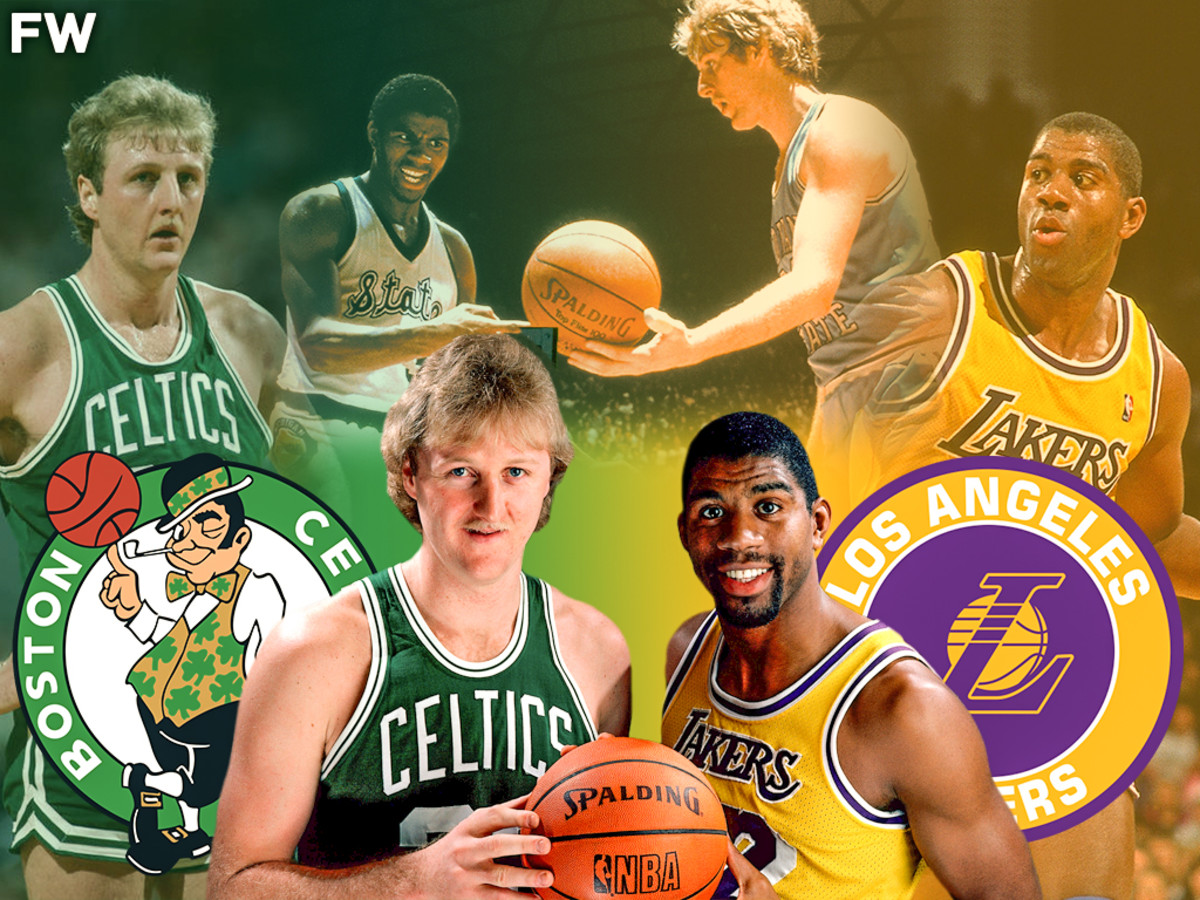
Larry Bird and Magic Johnson were both rookies during the 1979-80 NBA season. However, they were not both in the 1979 NBA Draft. Red Auerbach and the Boston Celtics had drafted Bird in the 1978 Draft as a “junior-eligible” knowing that they would have to wait a year to have him join the Celtics. Magic was drafted by the Lakers with the first pick of the 1979 draft after winning a coin flip prior to the draft.

Imagine if we could go back to June 25, 1979 and Larry Bird and Magic Johnson were both eligible to be selected in the NBA Draft. Both were coming off spectacular college seasons. Bird led Indiana St to a perfect regular season and a runner-up finish to Magic and the Michigan St. Spartans. If you were assured their NBA careers would be similar to what actually happened (multiple MVPs, NBA titles and first ballot Hall of Famers), who would you pick? Bird or Magic? Magic or Bird?

It is a tough question, but I would take Larry Legend, just barely, over Magic…. and here is why.

The 1978-79 College Season

Many people will simply say Magic was better in the 78-79 season because his team won it all and MSU beat Indiana St 75-64 in the NCAA Final. That is true, but let’s take a deeper look at that season. Both teams had great seasons. MSU finished 26-6 playing in a much tougher conference in the Big Ten while ISU was 33-1 in the Missouri Valley.

However, Magic had much more talent around him than Bird. Magic had Greg Kelser and Jay Vincent, who would both go on to have solid careers in the NBA. Bird had only one teammate, Carl Nix, who went on to the NBA and he had limited success.

Both were clearly the best players and leaders on their teams. Bird averaged 28.6ppg/14.9rpg/5.5apg for the season. Magic averaged a very respectable 17.1/7.3/8.4. However, in 34 games that season, Bird was the leading scorer for ISU thirty-two times and he led the team in rebounding thirty-one times. The only two times Bird was not the team’s leading scorer was the season opening blowout win and in a late season game against Bradley when he had just four points. In that game, Bradley’s coach, Dick Versace, decided to double team Bird even when he did not have the ball and Bird just stood on the side while his teammates played 4 on 3. ISU won in a blowout and Bird still led them in rebounding.

On the other hand, Greg Kelser was the leading scorer and rebounder for MSU for the season with 18.8/8.7 with Magic second in both scoring and rebounding. In thirty-two games, Magic led MSU in scoring fourteen times and was the leading rebounder eight times. Even though MSU was clearly the better team, Bird had to carry a much bigger load for ISU during the entire 78-79 season.

Bird and Magic’s Rookie Seasons

Bird and Magic both had terrific rookie seasons. Bird averaged 21.3/10.4/4.5 for the season was named Rookie of the Year in a landslide vote over Magic. Magic averaged 18.0/7.7/7.3 and led the Lakers to the 1980 NBA Title with an all-time performance against the Sixers in Game 6. Kareem was hurt and Magic finished with 42/15/7 while playing center in Kareem’s place. Of course, a lot of people forget that Jamaal “Silk” Wilkes dropped 37 points to help Magic and the Lakers finish off my beloved Sixers and Dr. J.

Once again, let’s look closer at the teams Bird and Magic joined in 1979. Magic joined a team that finished 47-35 in 1978-79 and had perhaps the best player in the NBA in Kareem Abdul-Jabaar. The 1979-80 Lakers, with essentially the same roster, went 60-22. They improved by thirteen games and won the title. I would argue that Magic was not even the best player on the Lakers that season. Kareem led the Lakers with 24.8/10.2 for the season and won the 1980 NBA MVP. In addition to Kareem, Jamaal Wilkes was the second leading scorer for the Lakers with 20 ppg and Norm Nixon was fourth at 17.8. I will admit that Magic probably saved Kareem’s career and helped him learn to love playing basketball again after a few angry seasons as a Laker pre-Magic (Kareem’s role as Roger Murdock in the movie Airplane helped people see a happier Kareem as well).

By contrast, Bird joined the Celtics in 1979 after they had finished one of their worst seasons in team history. In 1978-79, the Celtics finished 29-53 and were near the bottom of the Eastern Conference in the NBA. In 1979-80, the Celtics finished 61-21 for the season and lost to the Sixers in the Eastern Conference Finals. Bird led the Celtics in scoring and rebounding and was second in assists. Once again, with essentially the same roster, Bird’s supporting cast included Tiny Archibald, Cedric “Cornbread” Maxwell, and an aging Dave Cowens. With Larry Legend as their best player, the Celtics improved by thirty-two games over the previous season. Although Magic had a great rookie season, led his team to the NBA Title, and won the 1980 Finals’ MVP (which Kareem wins if he does not get hurt), Bird was the better player playing with lesser talent and was clearly the best player on the Celtics during his rookie year.

Bird vs Magic in the NBA

Let’s compare Bird and Magic’s overall NBA careers…….

BirdMagic
897 Regular Season Games

24.3/10/6.3

164 Playoff Games

23.8/10.3/6.5

3 NBA Titles

5 NBA Finals

10x All-Star

3x MVP

1980 ROY

2x Finals MVP

All-NBA 1st Team 9 Times

2nd Team 1 Time

All-Defense 3 Times

Naismith HOF

#33 Retired w/Celtics

Career Hi Points 60

40+ Points in a Game 53 Times*

*Includes regular season and playoffs

906 Games

19.5/7.2/11.2

190 Playoff Games

19.5/7.7/12.3

5 NBA Titles

9 NBA Finals

12x All-Star

3x MVP

1980 NBA All-Rookie Team

3x Finals MVP

All-NBA 1st Team 9 Times

2nd Team 1 Time

NBA Assists Leader 4x

NBA Steals Leader 2x

Naismith HOF

#32 Retired w/Lakers

Career High Points 46

40+ Points in a Game 11 Times*

Obviously, both Bird and Magic had stellar NBA careers and trying to pick between the two of them is like picking between a Mercedes and a BMW (I would take the Mercedes). Both were similar athletically in that neither were exceptionally quick or great leapers. Neither was a great “on the ball” defender. I doubt K.C. Jones or Par Riley ever went into a game thinking that either was going to shut down other teams best player.

Magic was probably a bit faster with the basketball in his hands, but Bird was a better scorer and rebounder. Both were great leaders who made their teammates better and cared about one thing…. Winning!!!!

Magic had more team success than Bird. Five NBA Titles to Bird’s three. Nine Finals appearances for Magic to five for Bird. But during Bird’s entire career with the Celtics, he was clearly their best player. Magic only became the Lakers’ best player once Kareem was in the last years of his career. I would also add that when Bird won three MVP’s in a row from 84-86, there was no question that he was the best player in the NBA. I believe that Magic was awarded his first because it was “Magic’s time” to win the award. Similar to Charles Barkley and Karl Malone winning their MVPs in the 90s. The reality is that Michael Jordan should have won every MVP from 87-93 and 96-98….. but that is a discussion for another time.

Game 4 NBA Finals June 9, 1987

My final reason for taking Bird over Magic is a sequence of two plays in Game 4 of the 1987 NBA Finals. On June 9, 1987, the Lakers and Celtics played one of the great NBA Finals’ games in the old Boston Garden. The Lakers had Magic, Kareem, “Big Game” James Worthy, and the Celtics had Bird, McHale, “DJ”, and “Chief”. Seven future Naismith Hall of Famers!!!!

The game came down to the final seconds and the Lakers had the ball under their own basket with seven seconds left and behind 106-105. In the NBA, coaches tend to go to their best player when the need a basket to win the game. This game was no different.

The first play was drawn up by Lakers’ coach, Pat Riley. Riley chose to go to his best offensive player to win the game that day, but it was not Magic. Riley drew up a play to go to his 40-year-old center, Kareem Abdul-Jabaar. Kareem was running on fumes, but Riley knew he could count on “The Captain” for one more skyhook to win the game. Both plays can be viewed below starting at about 7:30 into the video.

https://www.youtube.com/watch?v=0n1-KIcoIzU

If you watch the play closely, Magic gets the ball and is trying to go to Kareem on the block. But, McHale switched and his length made it hard to get the ball inside. Magic made and all-time great play by making his “baby sky hook” over Parish and McHale to give the Lakers the lead, but it was a broken play. Riley did not call the play for Magic. He called it for Kareem. Similar to when the Bulls beat the Jazz in 1997. Steve Kerr hit the game winner, but MJ was supposed to take the game winner.

Once Magic gave his team the lead, the game was not over. Boston had two seconds and the ball at the center line to get a shot to win the game. The end of the video shows that K.C. Jones drew up a final play for Larry Bird. Everyone in the Garden knew Bird was getting the ball. Pat Riley knew it. Magic knew. Even James Worthy knew it. Bird got the ball and had a wide-open look to win and nobody was more surprised he missed than he was.

Even though Magic made the game winner and Bird missed, the point is that Magic was seldom the guy his coaches looked to for a game winning shot. Bird was always “the guy” and everyone knew it. Most of the time, Bird would make that shot.

That one sequence of plays is the essence of why I would draft Larry Bird over Magic if I had the chance.